


Target group: students in grades 7–9
The aim of this activity is to deepen students’ understanding of ecosystem types, how organisms adapt to different environments, relationships between organisms, and the conservation of biodiversity.
Students also develop their understanding of the environment and evolutionary change by investigating organisms within a defined area and modelling food webs in order to evaluate the influence of abiotic, biotic, and human factors on ecosystems.
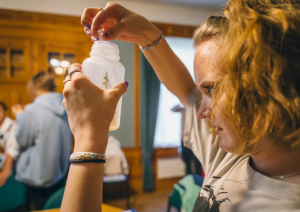
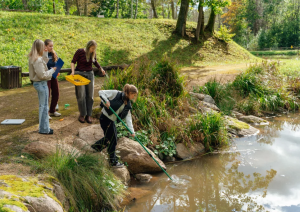
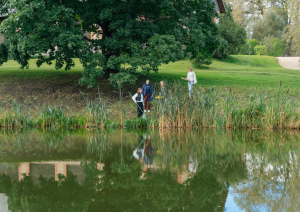
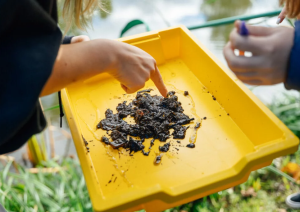
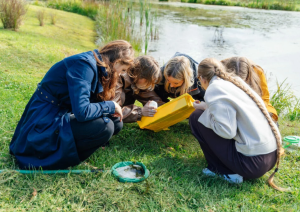
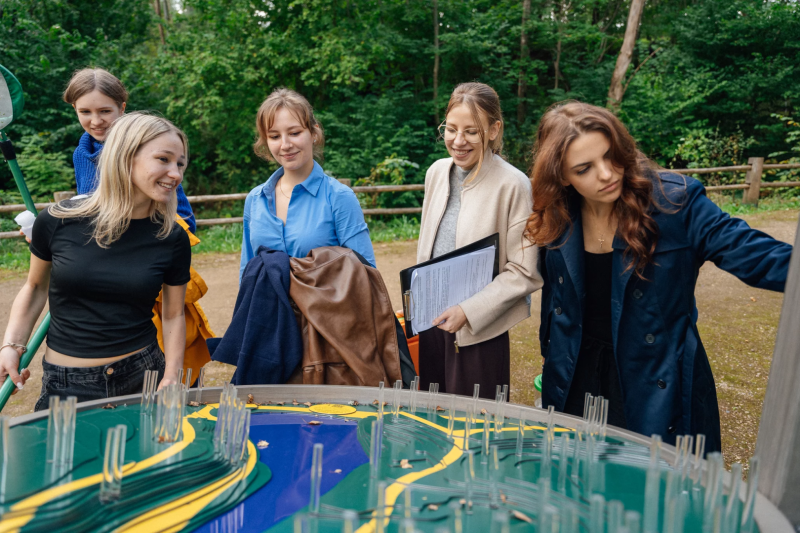
During the activity, students learn how to conduct field research in nature. Using a given methodology, they determine the water quality of the Museum Reserve’s ponds, using aquatic invertebrates as indicator species. Through this field study, participants learn the basic principles of bioindication and identify organisms using identification guides, classification schemes, and observation.
Linked to the Grade 9 Biology topic: “How are organisms connected to the environment in which they live?”
Students will:
- practise field research methods,
- identify organisms using classification guides and observation,
- compare ecosystems typical of Latvia according to species diversity and environmental conditions (temperature, precipitation, soil type, and light),
- work in teams to solve simple scientific problems and share responsibility for results.
Participation Information
Fee per student: €3.00 + museum admission ticket
(Seasonal admission: €2.00 from 1 May to 31 October; €1.50 from 1 November to 30 April)
Duration: 120 minutes (2 hours)
Group size: up to 30 participants
Season: April – October
Photo: Edgars Semanis