
The Turaida Museum Reserve, in cooperation with the University of Tartu Museum, is taking part in the joint project “Heritage for All: Education in Times of Crisis.” The project aims to enhance museum education for several specific target groups, including children with autism spectrum disorders and attention deficit/hyperactivity disorder (ADHD), as well as Ukrainian refugees and Russian-speaking audiences.
As part of the project, examples of good practice are being identified to develop a practical guide for museums and heritage sites, providing useful guidance on communication and engagement. The project partners are exploring accessibility solutions in museums through hands-on participation in activities, attending lectures, and sharing and discussing their experiences with one another.
As part of the project, the Turaida Museum Reserve hosted representatives of the University of Tartu Museum from 24 to 26 November 2025. In turn, colleagues from the Turaida Museum Reserve visited the University of Tartu Museum for an experience-sharing visit from 16 to 18 March 2025.
When the cooperation within the project began, each partner already had ideas and plans for developing its museum offer and making it more accessible to different audiences. At the end of the project, a practical guide will be published, bringing together examples of good practice from museums in both countries in working with sensitive target groups.
An important feature of this project is the opportunity to organise the necessary training. The Turaida Museum Reserve chose to develop the skills and knowledge of staff who work most closely with visitors on a daily basis – museum educators, tour guides and exhibition attendants. At the end of April, the museum held training entitled “Professional Visitor Service in a Museum”, focusing on working with different target groups while taking their needs and abilities into account. Several museum representatives also took part in plain language courses. The knowledge gained has already been put into practice in the development of the latest exhibition spaces in the castle. Short texts, plain language, tactile objects in display cases, sound and audio stories – all of these elements together allow visitors to experience information through their senses and make it more accessible to people with visual and cognitive impairments. For more specialized accessibility solutions, the organization “Socintegra” was invited to join the project as a partner. Together, several new information elements have been created for the castle exhibitions.
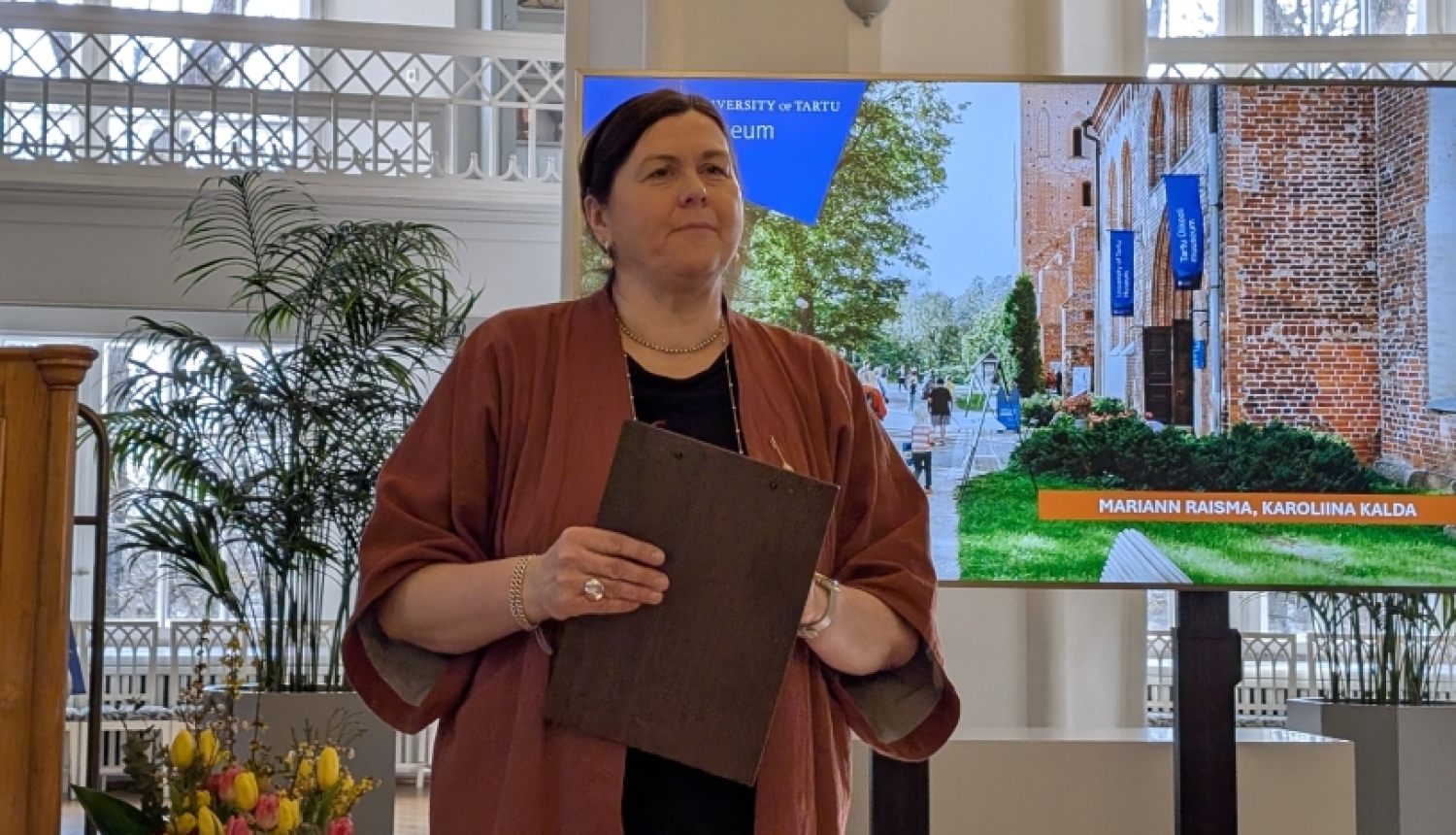
At the beginning of the meetings and exchange of experience between the two partners, Marianna Raisma, Director of the University of Tartu Museum, noted in her speech that today, well-considered accessibility aspects in a wide range of areas are fundamental to a good museum and are also one of the current issues in museology.
Improving accessibility in museums is a purposeful but gradual process. It begins with setting accessibility as a goal, followed by the necessary steps – staff training, improvements to exhibitions, and other measures. The experience gained throughout the project has been very valuable and confirms that the Turaida Museum Reserve is on the right path towards ensuring accessibility and becoming an open and inclusive environment for a diverse range of visitors.
The Turaida Museum Reserve and the University of Tartu are both included in the European Heritage Label list. The project is being implemented through a project call organised by the European Heritage Label Bureau and supported by the European Commission.