Since ancient times, Turaida has been a land of the Livs. The Livs (also called Livonians) belong to the Finno-Ugric cultural and linguistic family and began settling the lower Gauja River region in the 11th century. By promoting the rich heritage of Turaida’s historic centre, the Turaida Museum Reserve continues to introduce residents and visitors to the history and destiny of the Gauja Livs.
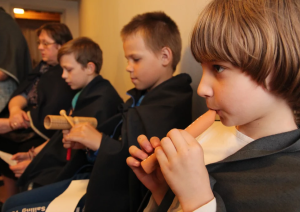
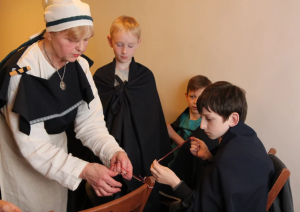
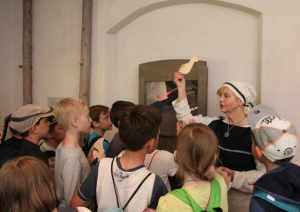
The educational programme “What Will the Livs’ Horse of Destiny Decide?” invites participants to discover the early history, culture, and language of Latvia’s indigenous people — the Livs. Through participation in a historical game, visitors enter the world of the ancient Livonians and relive events that took place in Turaida more than 800 years ago.
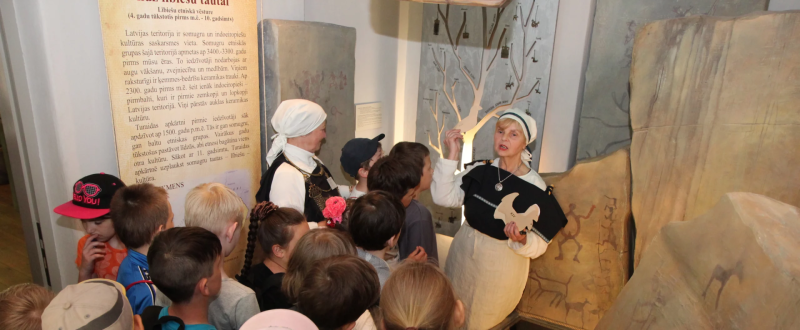
The programme is suitable for school-age children and young people of various ages. Participants are introduced to the exhibition “The Gauja Livs in the Cultural History of Latvia”, with special attention to Finno-Ugric mythology and life in the Turaida region in the 12th century. During the exhibition visit, each participant receives a task whose completion grants entry to the activity space — the ancient Livonian world.
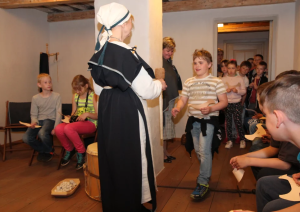
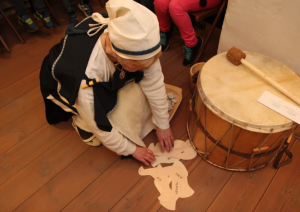
Assuming the roles of Livonians of Turaida, participants take part in an improvised tribal assembly. The historical game is based on events described in the Chronicle of Henry (Indriķis) of Livonia (1191), when the will of the gods — and the destiny of the missionary monk Theoderich — was determined with the help of a horse in a ritual divination.
According to the chronicle, the Livs intended to sacrifice the monk because his fields yielded a better harvest than theirs. The assembled people sought the gods’ will by divination: a spear was placed on the ground, and a horse stepped over it, deciding life or death with its first step. When the horse repeatedly chose the “foot of life,” Theoderich’s life was spared.
Practical Information
Price (per group):
- School groups — €35.00 + admission tickets
- Foreign languages (school groups) — €50.00
Duration: 1.5 hours
Group size: up to 30 participants
Season: year-round
Language: Latvian
Photo: by Agris Tabaks